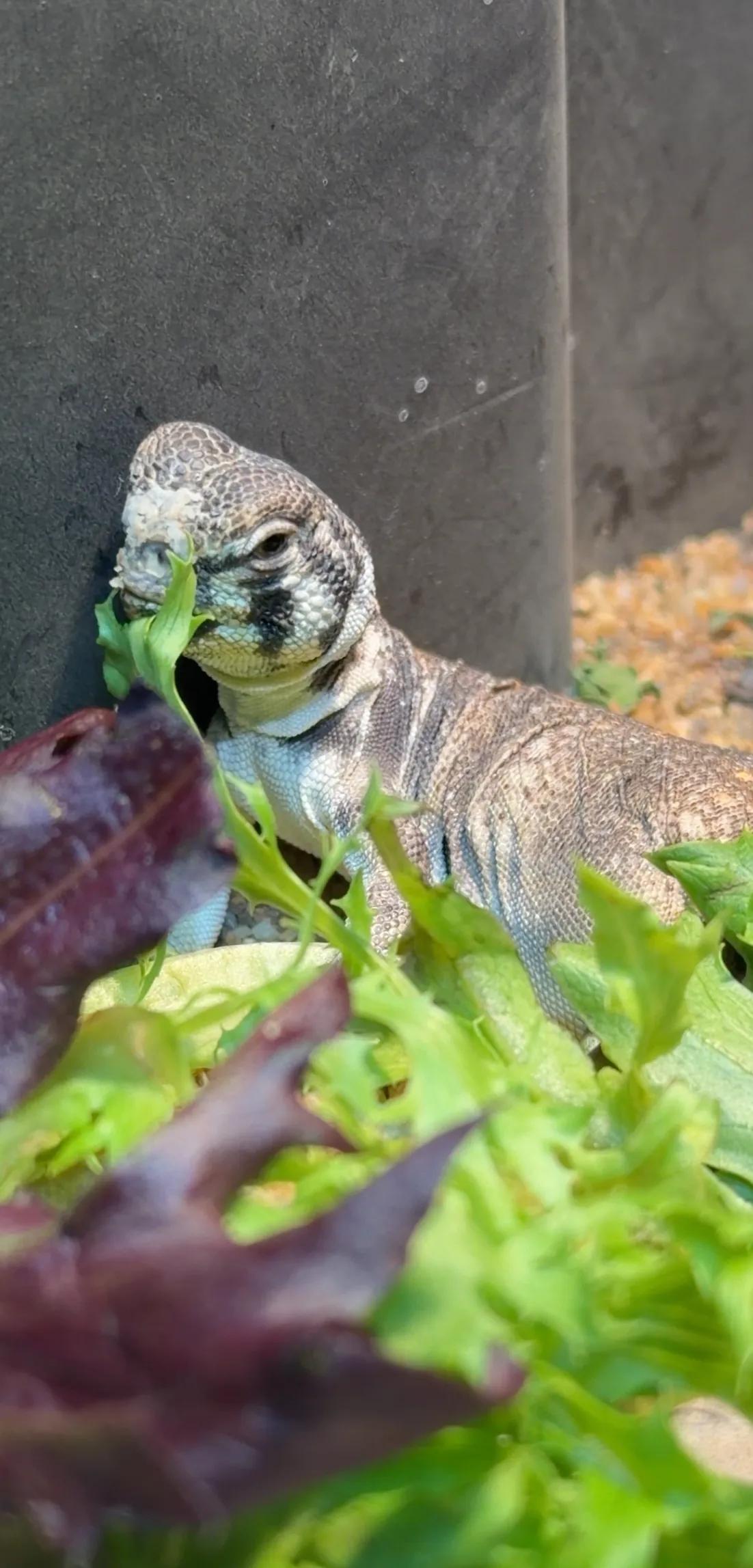
How often
- Babies and juveniles: every day, as much as they’ll eat. Chop greens small.
- Adults: most days (at least 4–5 times a week). Offer a full bowl in the morning, once the enclosure is warm.
- Winter: appetite drops during the seasonal slowdown. Keep offering greens anyway.
Greens
Mix several kinds every day. Variety matters more than any one “perfect” green.
- Staples: collard greens, turnip greens, mustard greens, dandelion greens, endive, escarole
- Good extras: kale, spring mix, arugula, radicchio, cilantro, bok choy
Young, tender leaves get eaten more readily than tough or bitter ones.
Flowers
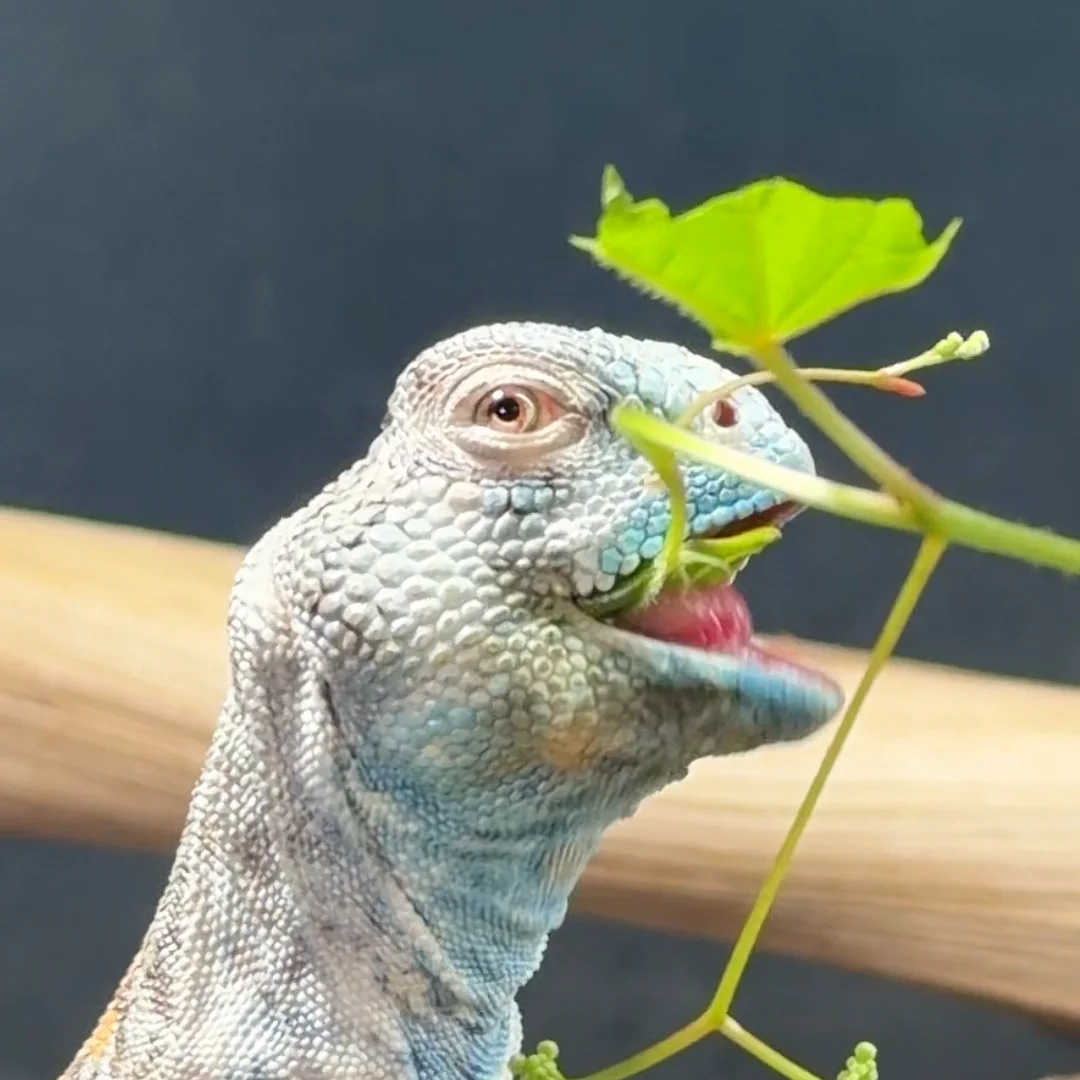
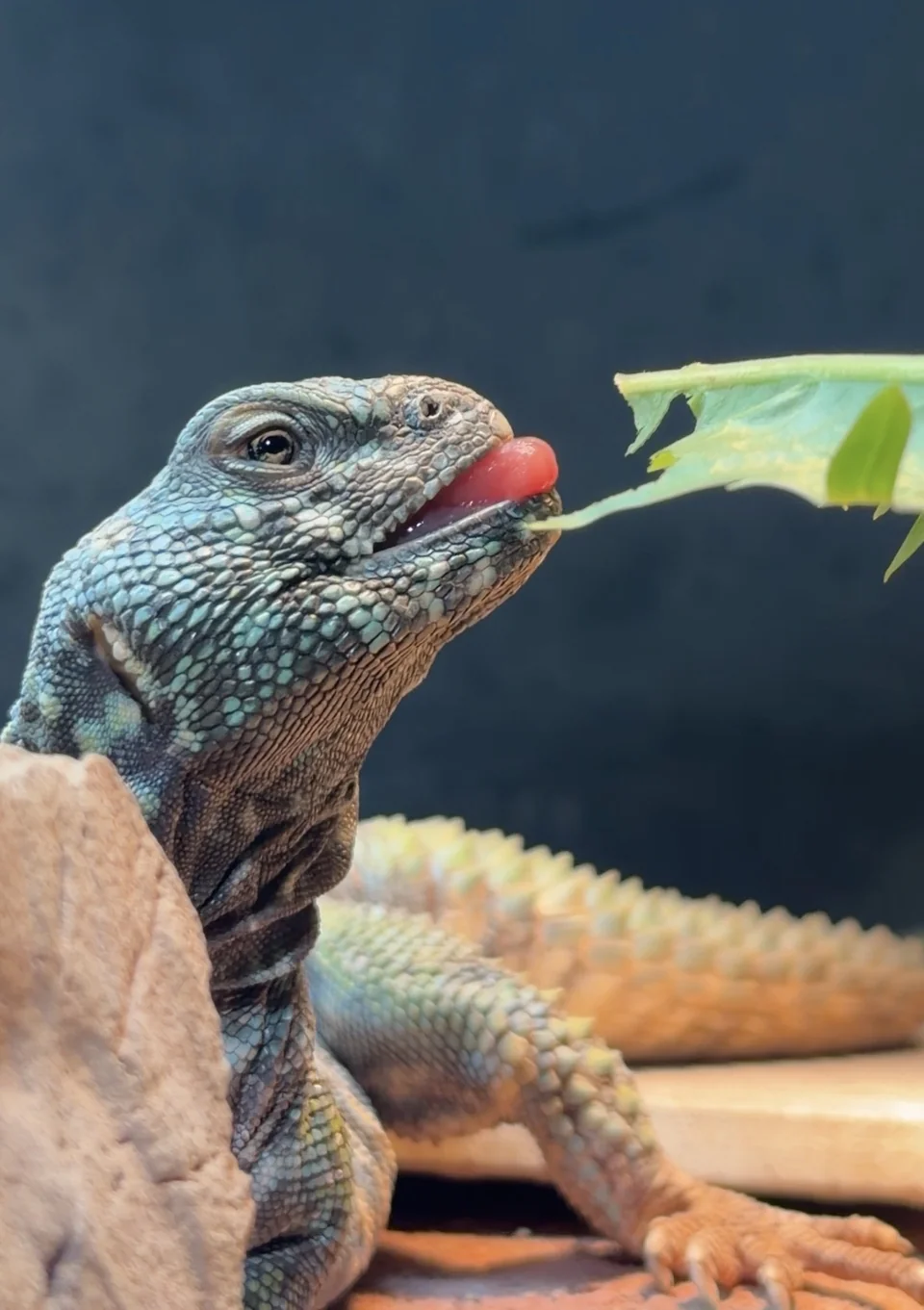
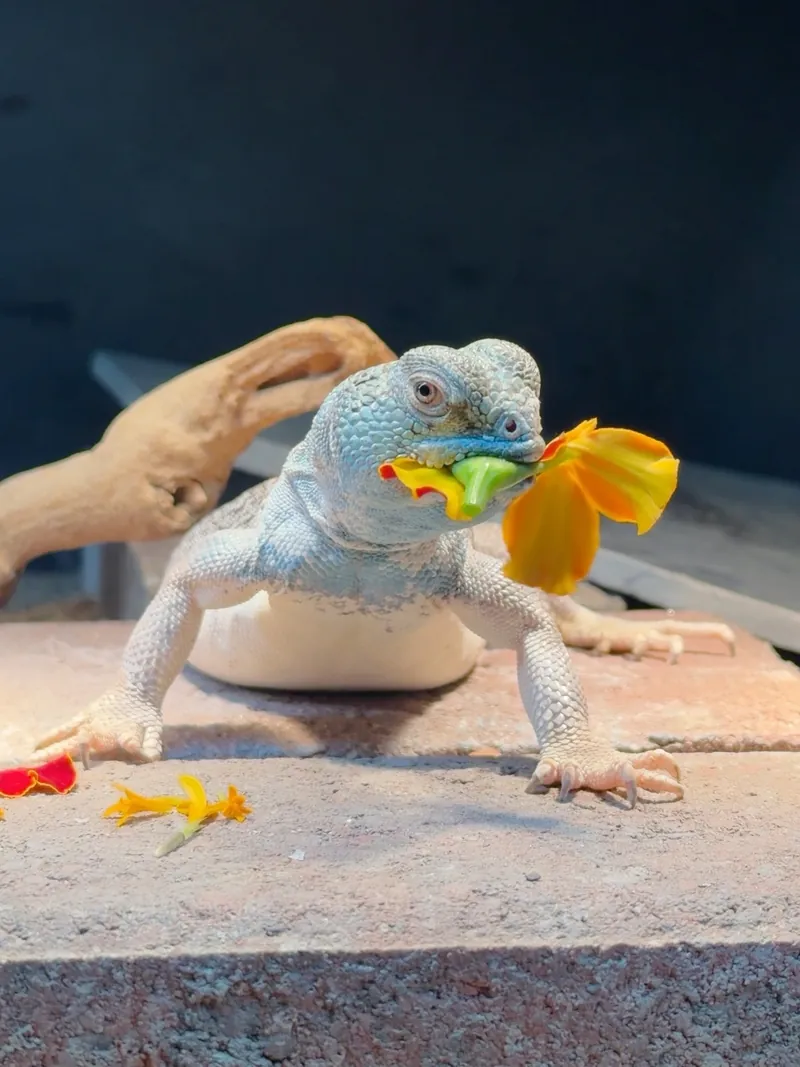
Most uros love flowers, and they can be offered freely. Good choices are hibiscus, dandelion flowers, rose petals and calendula (pot marigold, not the Tagetes “marigold”). Only use flowers you know are pesticide-free. Shop-bought florist flowers usually aren’t.
Vegetables and treats
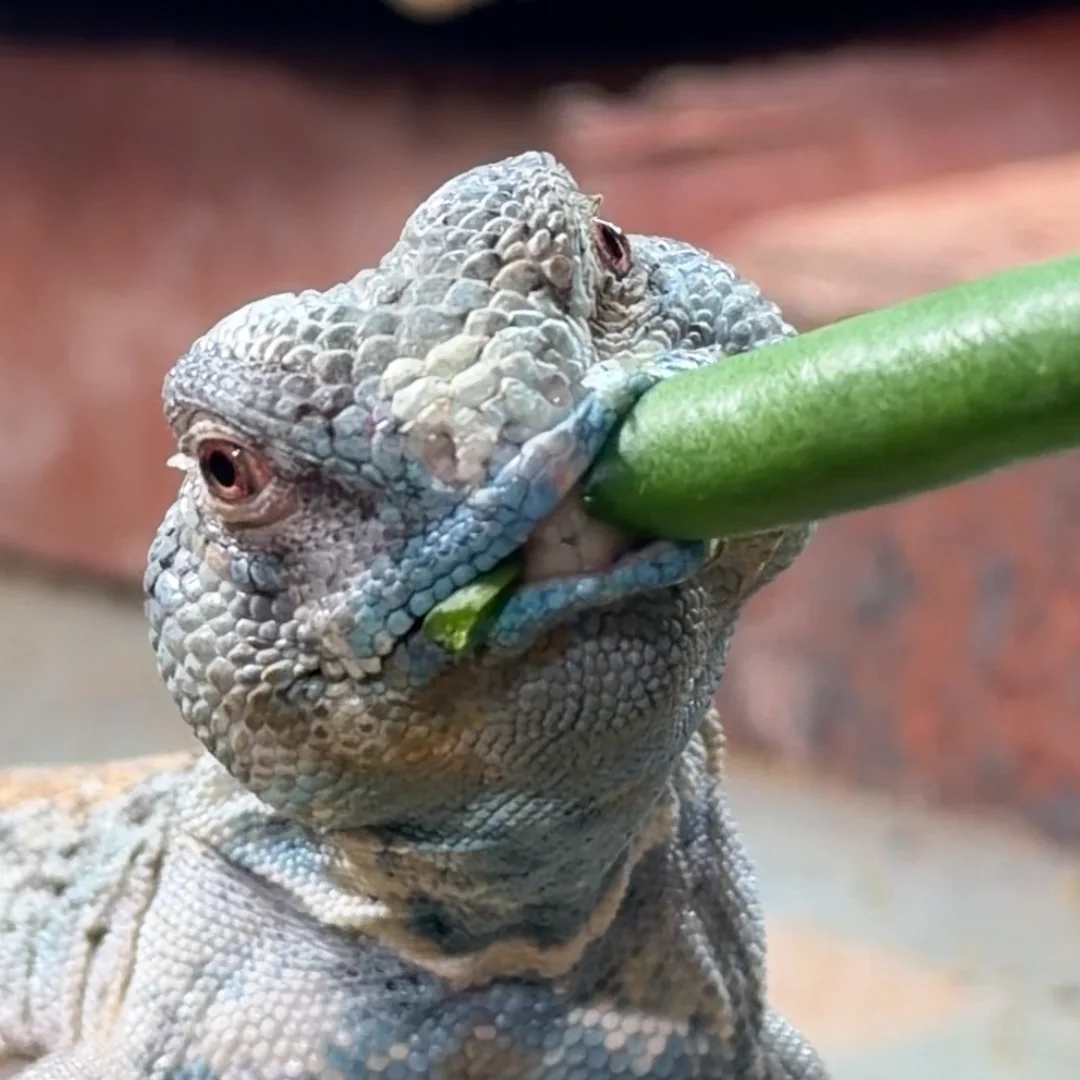
A few times a month: squash, zucchini, carrot (grated), green beans, peas, okra and prickly pear cactus pads. They’re great for hand-feeding and building trust, but they don’t replace greens.
Fruit is a rare treat at most. It’s high in sugar.
Seeds, lentils and pellets
Many keepers leave a shallow dish of dry lentils or a seed mix in the enclosure for adults to graze on. I offer them regularly, but not unlimited. They’re calorie-dense, and too many lead to weight gain and a uro that ignores its greens. Skip them for babies under about 6–8 months. A pellet food made for herbivorous reptiles is another good dry option, mostly in spring and summer.
Insects
Not needed. Some keepers offer the occasional mealworm as a treat, roughly every week or two, dusted with supplements. Never as a main food.
Foods to avoid
- Spinach and beet greens as staples: high in oxalates, which block calcium.
- Avocado and rhubarb: toxic.
- Iceberg lettuce: mostly water, very little nutrition.
- Fruit, regularly: too much sugar.
- Pesticide-treated plants and flowers.
Serving tips
- Wash greens and chop them to bite size.
- Dust with calcium and multivitamin about twice a week (see the care guide).
- Feed in the morning, after the lizard has warmed up.
- Remove leftover wilted greens at the end of the day.
Sources: Arids Only, ReptiFiles. Not veterinary advice.