At a glance
| Enclosure | 4 × 2 × 2 ft minimum, one uro per enclosure |
|---|---|
| Basking surface | 120–130°F (49–55°C) |
| Air, warm half | About 85–92°F |
| Cool end | About 78–85°F |
| Night | Room temperature; heat only if it drops below about 62–65°F |
| UVB | A long T5 UVB tube, like the Arcadia T5 Desert. Required. |
| Light schedule | 12–14 hours in summer, about 10 in winter |
| Humidity | Low, about 20–30% |
| Substrate | Packed sand or sandy soil, 4+ inches deep |
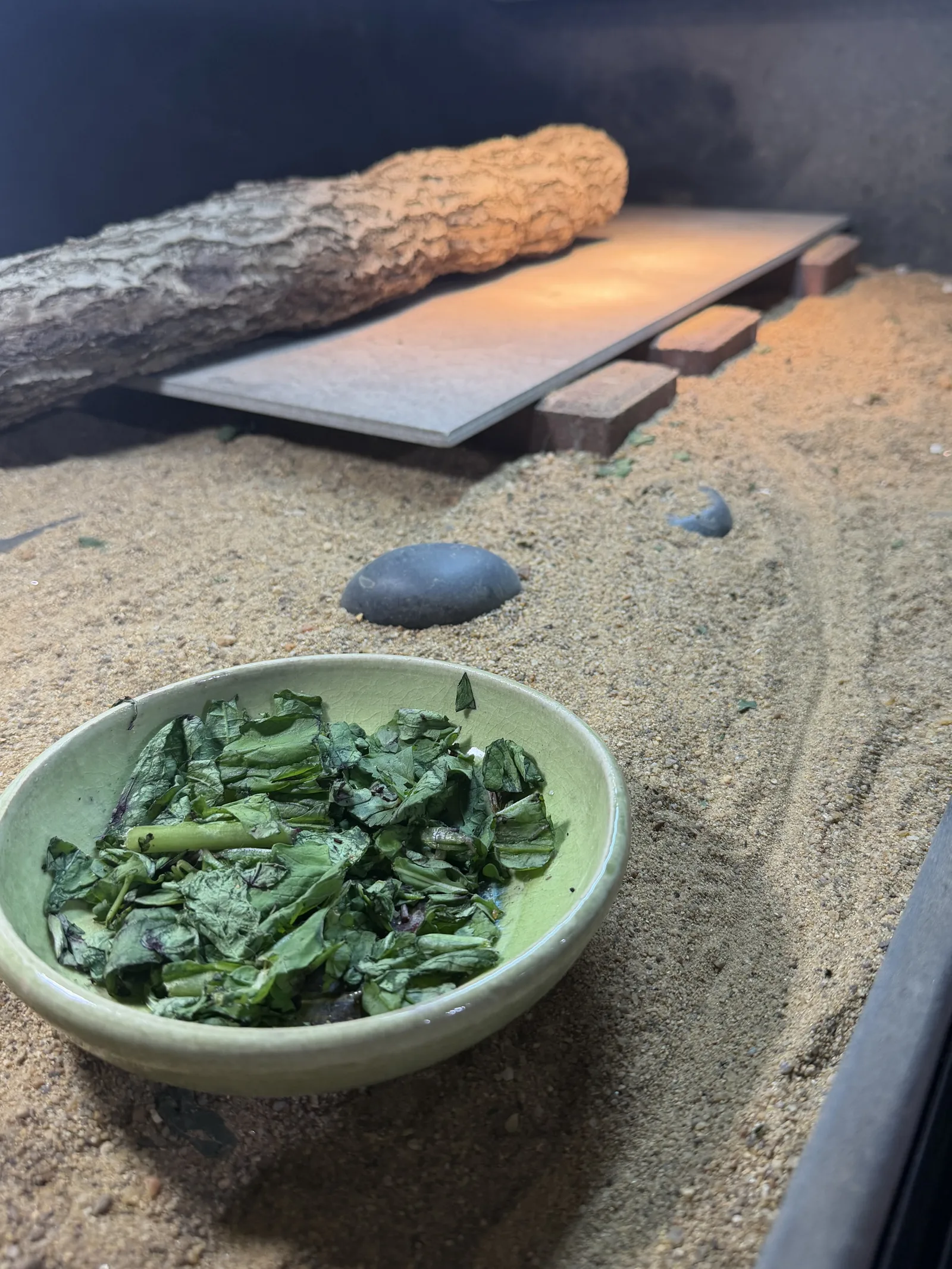
| Diet | About 90% leafy greens and flowers |
| Lifespan | 25+ years |
Before you get one
A uromastyx can live 25 years or more, so it’s a long commitment. Buy captive-bred when you can. Wild-caught animals are more stressed and more likely to carry parasites.
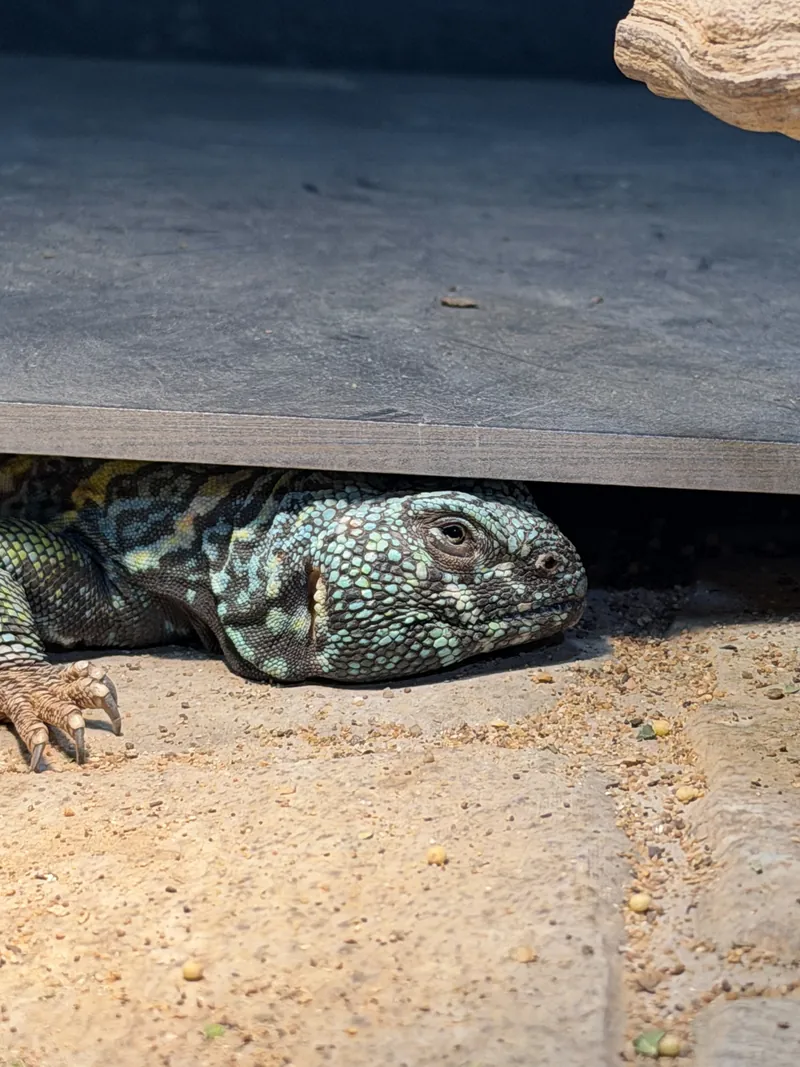
A healthy uro has clear eyes, a rounded belly and a thick tail base, moves alertly, and has clean nostrils and vent. A white crust around the nose is normal: it’s salt they sneeze out. Don’t pick based on which one is friendliest in the shop. A calm uro can also be a sick one.
Expect a new animal to be shy. Some take months to settle.
Enclosure
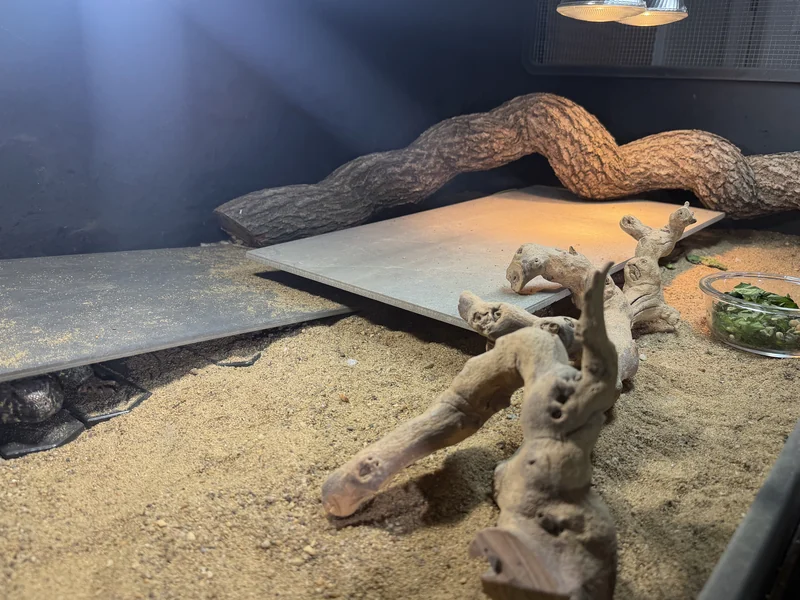
Most species need at least 4 × 2 × 2 ft (120 × 60 × 60 cm). Bigger is better. Large species such as Egyptian uros need far more (8 × 4 ft or larger). Floor space matters more than height, though ornates and ocellated uros like to climb.
Use a front-opening enclosure with good ventilation. A 40-gallon tank is too small for an adult. Babies can go straight into the adult-size enclosure, as long as they have plenty of hides.
Keep one uro per enclosure. Groups can work in very large setups, but fights and stress are common.
Heat
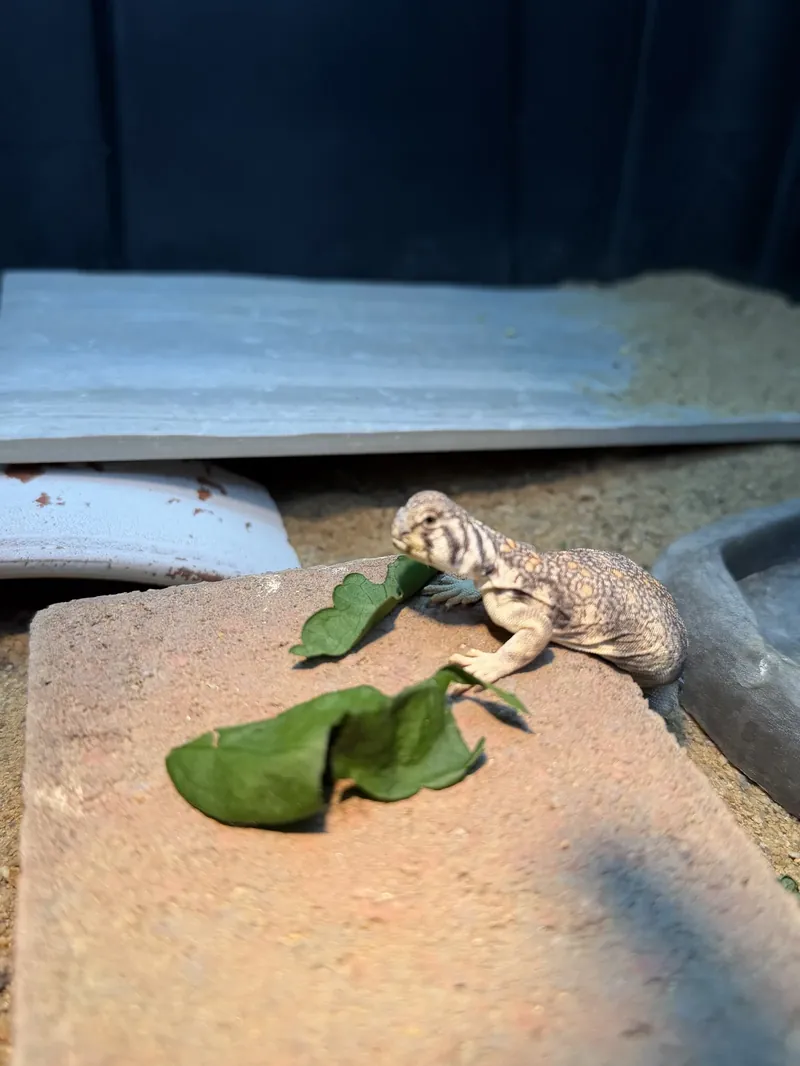
Uros need a very hot basking spot: 120–130°F (49–55°C) on the surface. That’s hotter than most pet reptiles, and a cool basking spot is the most common mistake. The rest of the enclosure should step down to a cool end of about 78–85°F, so the lizard can move between hot and cool on its own.
- Heat source: halogen flood bulbs (PAR30/PAR38) over a flat stone or tile basking platform. A dimmer makes it easy to fine-tune.
- Measure it: an infrared temperature gun on the basking surface, plus a digital probe thermometer for the air. Stick-on dial gauges aren’t accurate.
- Night: turn all lights off. Extra heat is only needed if your room drops below about 62–65°F. Use a heat source that gives off no light.
UVB and light
UVB is essential. Uros need it to use calcium. Without it they slowly develop bone disease, even on a perfect diet. A window doesn’t count, because glass blocks UVB.
- Use a long T5 UVB tube, like the Arcadia T5 Desert (12% for most enclosures, 14% for tall ones), running about half to most of the enclosure length on the warm side.
- Put it close to the basking spot, so the lizard basks under both heat and UVB. Mesh tops block some UVB, so mounting the tube inside the enclosure works better.
- Replace it every 6–12 months, as the maker recommends. UVB fades long before the tube looks dim.
- Leave some shade so the lizard can get out of the light.
Light schedule: about 12–14 hours a day in spring and summer, shorter in winter (see winter slowdown).
Substrate and hides
Use packed sand or a sand-and-soil mix at least 4 inches deep. Uros dig, and burrowing is good for them. Avoid calcium sand, seed or millet, walnut shell, and very fine, dusty sand. Use paper towels for a sick animal, quarantine, or a tiny baby.
Set heavy rocks, slate and basking platforms directly on the floor before adding sand, so they can’t be dug under and collapse. Add several snug hides (cork, stacked slate with gaps, wood), climbing pieces, and one slightly damp hide or burrow. Scoop poop daily and replace the substrate every few months.
Humidity and water
Keep the air dry, around 20–30% humidity, with good ventilation. Damp, stuffy enclosures cause respiratory infections and tail rot. A single slightly moist burrow or hide is fine. Keep the top layer of sand dry.
Uros get most of their water from fresh greens. A small, shallow water dish is fine to offer, but many uros rarely drink from it. A short, warm soak can help a dehydrated or recovering animal. Healthy uros don’t need regular baths.
Food
Adults eat about 90% leafy greens and flowers, with some vegetables, dry lentils or seeds, and pellets. Babies eat every day, as much as they want. Adults eat most days.
- Staples: collard, turnip, mustard and dandelion greens, endive, escarole, plus flowers like hibiscus and dandelion.
- Sometimes: squash, green beans, peas, prickly pear cactus. Adults can have dry lentils or seeds regularly, but not unlimited.
- Skip: spinach as a staple (high in oxalates), regular fruit, and any flowers or plants that may have pesticides.
→ Full list and portions: Food guide
Supplements
Most guides recommend lightly dusting greens with calcium and a reptile multivitamin about twice a week. Some keepers use less with strong UVB. Use a calcium without added D3 when your UVB is good. Needs vary with age, diet and health, so check with a reptile vet.
Handling
Let a new uro settle for about two weeks without handling. Feed it and leave it alone. After that, build trust with hand-feeding, and pick it up gently from below, never from above like a predator. Many uros become calm and curious, but they rarely like long handling sessions. If a new uro hasn’t eaten after two weeks, see a vet.
Winter slowdown
From around late September, many uros slow down, eat less and hide more. That’s normal. It’s a light seasonal slowdown, called brumation. Many keepers shorten the light schedule by about an hour a week to around 10 hours, then lengthen it again from late January. Keep fresh greens available.
A little weight loss from the belly is normal. Weight loss in the tail or legs is not. Have the animal checked by a vet before its first winter.
Health and the vet
Find a reptile vet before you need one. Get a fecal (poop) test for any new animal, especially wild-caught ones.
See a vet for:
- Not eating outside the winter slowdown
- Loose, bloody or bad-smelling poop that keeps happening
- Weight loss in the tail or legs
- Swollen limbs, toes or eyes
- Discharge from the eyes, nose or mouth, or labored breathing
- Crust at the mouth (not the normal white salt at the nose)
- Trouble walking, or dark, damp spots on the tail
Babies and juveniles
Babies need the same heat and UVB as adults, and they eat every day. Chop greens small. Avoid seeds, lentils and hard dry food until about 6–8 months old, since they can cause blockages. Paper towel or a firmly packed sand mix is safest while they’re tiny. Some species can share an enclosure as babies, but separate them as they grow and watch for bullying.
Sources
- Arids Only, Uromastyx care guide (Phillip Lietz, 2023)
- ReptiFiles, Uromastyx care sheet
- LafeberVet / Frances Baines, "UVB lighting for reptiles" (2024)
- Merck Veterinary Manual, reptile husbandry
Care needs vary by species and individual. This guide is not veterinary advice. See a reptile vet for health concerns.